
Wood Fence Installation Costs: What Impacts the Price?
A new timber fence can completely change the appearance of a garden while improving privacy, security and boundary definition. It remains one of the most popular fencing choices throughout Bedfordshire and Hertfordshire because it offers a traditional appearance that works well with a wide variety of properties. However, one of the first questions homeowners ask is how much a wood fence installation will cost.
The reality is that there is no single price that applies to every project. Two gardens of similar size can have very different installation costs depending on the materials selected, access to the site, ground conditions and the overall scope of the work. Understanding these factors helps homeowners budget accurately and avoid unexpected costs during the project.
From our experience installing fencing across the region, the cheapest quotation is not always the best value. The quality of materials, installation methods and long-term performance can have a significant impact on what a fence ultimately costs over its lifespan. By understanding the main pricing factors, homeowners can make better comparisons when choosing a fencing solution.
Fence Length Is One of the Biggest Cost Factors
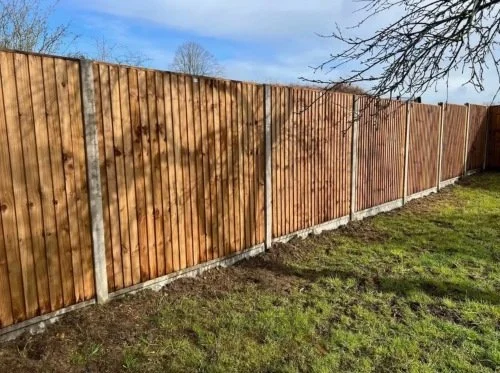
The overall length of the fence is usually the first factor influencing cost. More fencing requires additional panels, posts, gravel boards and fixings, while installation time also increases as the project grows.
A short boundary replacement may only involve a handful of panels and posts, whereas a larger perimeter fence can require significantly more materials and labour. While larger projects often benefit from certain efficiencies, material requirements remain one of the primary contributors to overall pricing.
Accurate measurements are essential before cost estimates can be prepared. During a site survey, we measure the full boundary run and identify any areas that may require special consideration before installation begins.
The Type of Timber You Choose Matters
Not all timber fencing is the same. Different fencing styles and timber specifications can vary considerably in price, durability and appearance.
Traditional overlap panels are often among the most economical options for residential gardens. Closeboard fencing generally costs more but offers greater strength and durability, making it a popular choice among homeowners seeking a longer-lasting solution. Decorative fencing designs, bespoke panels and premium timber products may increase costs further due to the additional materials and manufacturing involved.
Material quality should always be considered alongside price. A slightly higher investment in stronger materials can often result in better performance and a longer service life.
Ground Conditions Can Affect Installation Costs
Ground conditions frequently influence installation costs more than homeowners expect. While a flat, accessible garden may be relatively straightforward to work on, uneven terrain can create additional challenges.
Sloping gardens often require stepped fencing designs or adjustments to post positioning. Areas with old concrete foundations, tree roots or particularly hard ground may require additional preparation work before posts can be installed correctly.
Proper post installation is critical to the long-term stability of any timber fence. A fence that is not adequately supported is more vulnerable to movement, storm damage and premature failure, making ground preparation an important element of the overall project.
Access to Your Garden Can Influence Labour Requirements
Access is another factor that can affect installation pricing. If installers can easily reach the work area with materials and equipment, the process tends to be more efficient.
Properties with restricted side access, narrow passageways or limited parking arrangements may require materials to be transported manually across greater distances. This can increase installation time and labour requirements.
During site visits, we assess access carefully because it helps us understand how the installation will be completed and what resources may be required. Every property presents its own practical considerations, and these can influence project costs more than many people realise.
Removing an Existing Fence Adds to the Project
Many fencing projects involve more than simply installing a new fence. Existing panels, posts and debris often need to be removed before work can begin.
Older concrete posts can be particularly challenging to extract, while damaged fencing may require additional waste removal. The takedown and disposal of an existing fence is quoted separately and is not included in online guide prices, so these costs are confirmed within your tailored quotation following a site visit.
Although this adds to the overall project cost, proper removal ensures the new fence can be installed correctly and provides a clean starting point for the replacement boundary.
Fence Height and Design Can Affect Pricing
Fence height influences both material requirements and installation complexity. Taller fences generally require longer posts and additional structural support compared with lower boundary fencing.
Many homeowners choose higher fencing to improve privacy, particularly where neighbouring properties overlook the garden. Decorative features such as trellis sections, shaped tops and bespoke designs can increase costs further because they involve additional materials and installation time. We can also include hedgehog holes in wood and concrete fencing, or in ColourFence, at the time of installation.
Choosing the right balance between appearance, privacy and budget is often one of the most important decisions during the planning stage of a fencing project.
Long-Term Costs Are Worth Considering
Many homeowners understandably focus on the installation price when comparing quotations. However, it is equally important to think about future maintenance costs and expected lifespan.
Timber fencing requires periodic treatment to help preserve its appearance and protect against weather exposure. Over time, repairs and replacement panels may also become necessary. This does not mean timber is a poor investment. It remains an excellent choice for many properties, but homeowners should be aware of the ongoing maintenance requirements involved.
Getting an Accurate Timber Fencing Quote
Because every property is unique, professional surveys remain the most reliable way to understand installation costs. Measurements alone rarely tell the whole story, and factors such as access, ground conditions, existing structures and design preferences all contribute to the final quotation.
We regularly help homeowners compare timber fencing with alternatives such as ColourFence composite and ColourFence steel when considering the best option for their property. Our fencing cost calculator provides a materials-only guide price, which does not include installation, ballast, or the takedown and disposal of an existing fence, while a site survey allows us to produce a tailored quotation based on your exact requirements.
Frequently Asked Questions
-
Costs vary depending on fence length, fencing style, site conditions, access and installation requirements. A tailored quotation provides the most accurate assessment.
-
Generally, yes. Closeboard fencing requires more materials and offers greater strength, which typically results in a higher overall cost.
-
In most cases, yes. Labour and disposal costs are usually included when existing fencing must be removed before installation.
-
Yes. Taller fencing requires additional materials and stronger support structures, which can increase project costs.
-
Absolutely. Timber remains a popular fencing solution because of its traditional appearance and versatility, although ongoing maintenance should be considered when comparing options.
Ready to price up your timber fencing project? Ward Fencing installs wood and concrete fencing, ColourFence composite and ColourFence steel across Bedfordshire and Hertfordshire. Try our fencing cost calculator for a materials-only guide price, then contact us to book a site survey and receive your tailored quotation.
