
Composite vs Timber Fencing
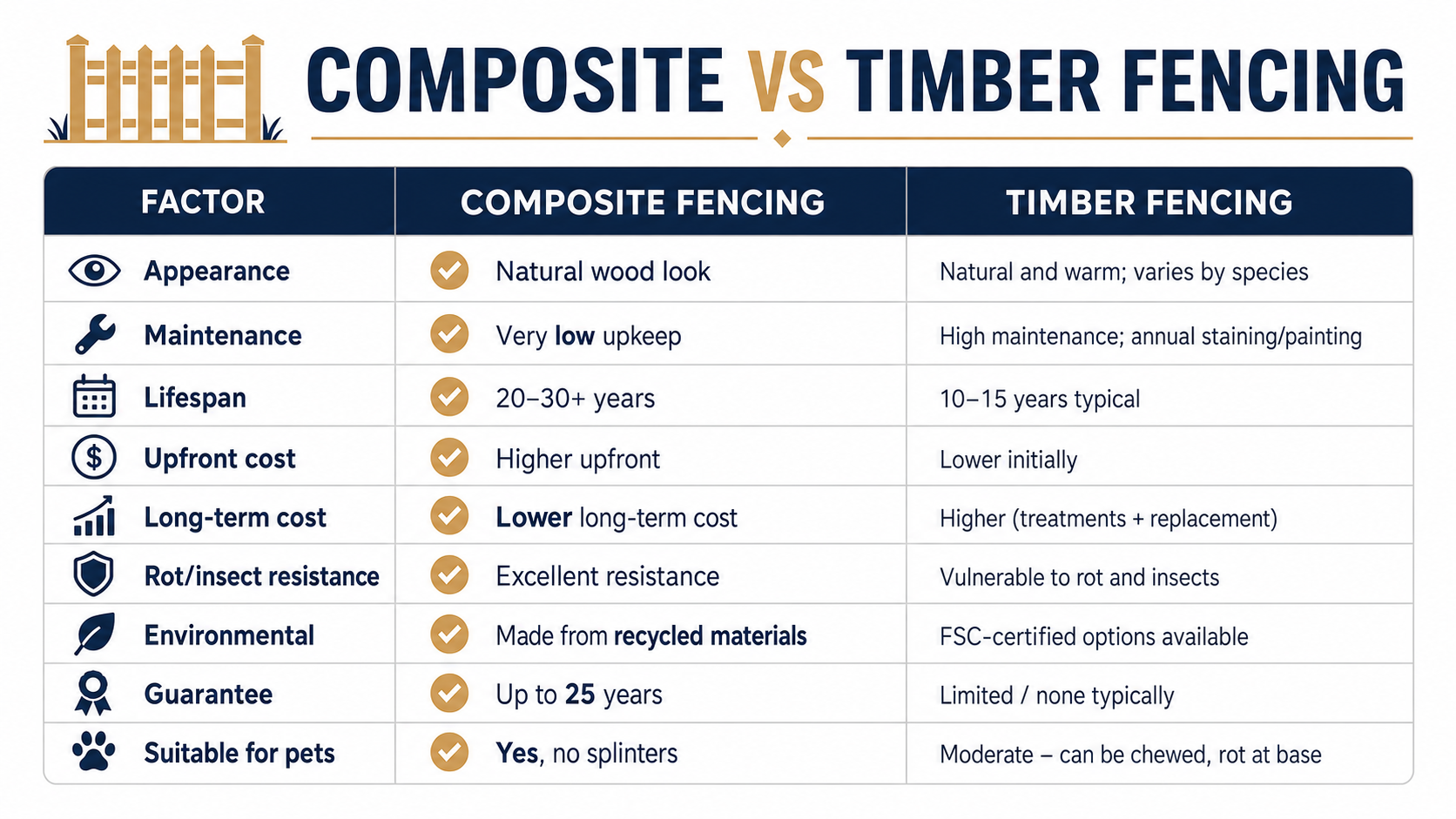
Composite fencing has grown rapidly in popularity across the UK, particularly among homeowners who want the natural appearance of timber without the maintenance. This comparison covers the key differences to help you decide which is the right choice for your garden and budget.
Comparison Table
5 FAQs Composite vs Timber
-
For most homeowners, yes particularly over a 10–15 year time horizon. The elimination of annual treatment, the longer lifespan and the absence of rot or warping means the total cost of composite is typically lower than timber maintained over the same period.
-
Modern composite fencing is manufactured with realistic wood grain textures and a range of warm tones. It is generally considered more convincing than vinyl or PVC alternatives, though it will always differ slightly from natural sawn timber.
-
Quality composite fencing is typically rated for 20–30+ years and is manufactured to resist the moisture, UV and temperature cycles typical of the UK climate. Premium products come with residential warranties of up to 25 years.
-
No and this is both a strength and a limitation. Composite panels cannot be repainted to change their colour, but they also retain their finish without any treatment. Colour choice at the point of purchase is therefore important.
-
Both are strong low-maintenance options. ColourFence (steel) offers higher wind resistance (rated to 130mph), is fireproof and carries a 25-year guarantee. Composite closely mimics a timber appearance. The choice depends on whether natural aesthetics or maximum performance in exposed conditions is the priority.
