
Bedfordshire Boundary Fence & Neighbour Considerations
Boundary fences are one of the most common sources of neighbourly dispute in the UK, and getting the basics right before installation saves a lot of stress later. The rules around fence heights, ownership and planning permission are fairly straightforward in most cases, but local restrictions, property deeds and conservation area designations can all add complexity. This guide covers the essentials under current UK law and guidance.
UK Fence Height Rules (2025 - 2026)
Under permitted development rights in England, most domestic fences do not require planning permission provided they remain within standard height limits.
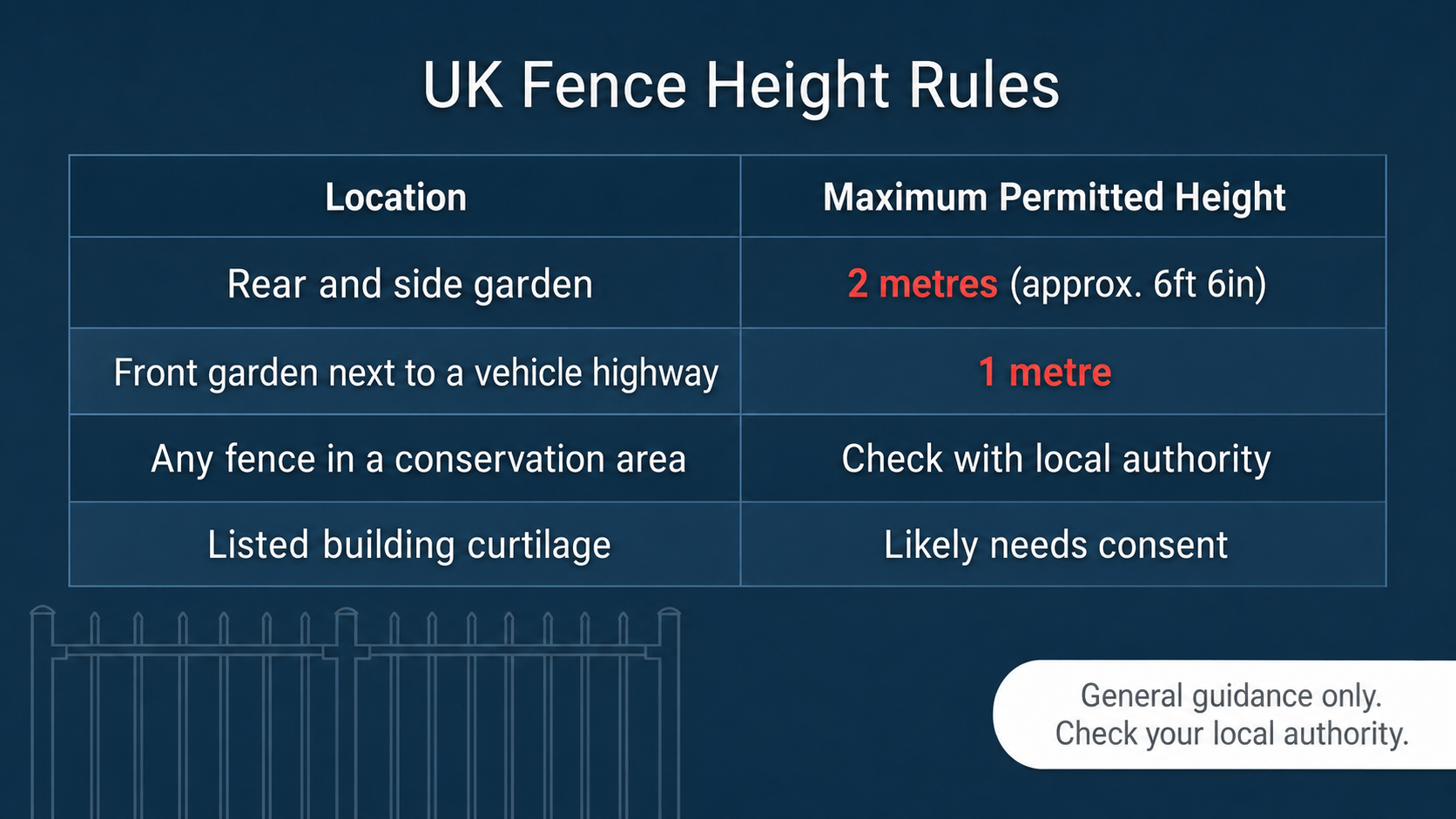
Going above these heights, including adding trellis that takes the total above 2 metres, will normally require a planning application.
Who Owns the Boundary Fence?
There is no single UK rule that says "left side" or "right side" is yours, this is a persistent myth. Ownership is determined by:
Title deeds: most conveyancing solicitors include T-marks on plans showing which party owns which boundary.
Land Registry: the registered title plan may show boundary features.
Seller's Property Information Form: previous owners may have declared responsibility.
Importantly, there is no legal obligation for any UK homeowner to have a fence or maintain a boundary at all, except in specific cases near railways, quarries or livestock fields.
Talking to Your Neighbour Before You Start
While no law requires you to consult a neighbour before replacing a fence on your own land, doing so avoids disputes over:
The exact position of the boundary line
Fence height and appearance from their side
Access needed to install on or near the boundary
The "good side" facing direction, common courtesy but not a legal requirement
If the fence sits on or forms a shared boundary, more formal communication and potentially agreement, may be needed before work proceeds.
Party Wall Act and Fencing
The Party Wall Act 1996 primarily covers walls, but its provisions can apply to boundary structures that form part of a party wall. For most standalone garden fences set entirely within your land, the Act is unlikely to apply, but if in doubt, seek advice from a solicitor before starting.
FAQs Boundary & Neighbour Rules
-
There is no universal rule. The only reliable way to establish ownership is to check your title deeds, Land Registry documents or the Seller's Property Information Form from your purchase.
-
If the fence is on your land, your neighbour has no right to use it, attaching trellis, plants or other items without your consent is technically trespass. Politely raising the issue directly usually resolves it without needing legal action.
-
In most cases, no. A fence up to 2 metres (approximately 6ft 6in) in a rear garden generally falls within permitted development. But if your property is in a conservation area, near a listed building, or subject to estate covenants, additional rules may apply.
-
There is no general legal obligation in England for a homeowner to maintain a fence. Unless a deeds covenant or specific local rule creates an obligation, you cannot force a neighbour to repair or replace their boundary feature.
-
Encroaching over a boundary is potentially a trespass on your neighbour's land. The safest course is to agree the exact boundary line, ideally with reference to deeds, before installation begins. Ward Fencing always advises confirming boundary positions before a new fence is installed
