
Best Pet-Safe Fencing in Bedfordshire
Choosing fencing for a dog or cat, pet-safe fencing installation in Bedfordshire requires thinking about more than appearance, height, gap width, structural strength and gate hardware all determine whether the fence actually keeps your pet in safely. Different breeds and animals have different needs, from small dogs who can squeeze through gaps to powerful breeds who jump or dig.
Key Requirements for Pet-Safe Fencing
Height - most medium and large dogs need at least 1.5–1.8 metres. Agile or athletic breeds may need the full 2 metres.
No gaps at the base - gravel boards or buried mesh prevent digging escape routes.
Close infill spacing - no gaps wide enough for small dogs to pass through or get their head stuck.
Solid surface - a smooth, solid panel with no horizontal rails gives dogs nothing to climb.
Self-closing gate latches at height - latch positions too low can be operated by an intelligent dog; self-closing mechanisms add safety.
Best Fencing Types for Pets
ColourFence Solid Panels
The interlocking steel infill with no horizontal rails makes low-maintenance ColourFence panels one of the most effective options for containing dogs. There is nothing to climb, no gaps and no deterioration of the base over time that might create an escape route.

Closeboard Timber
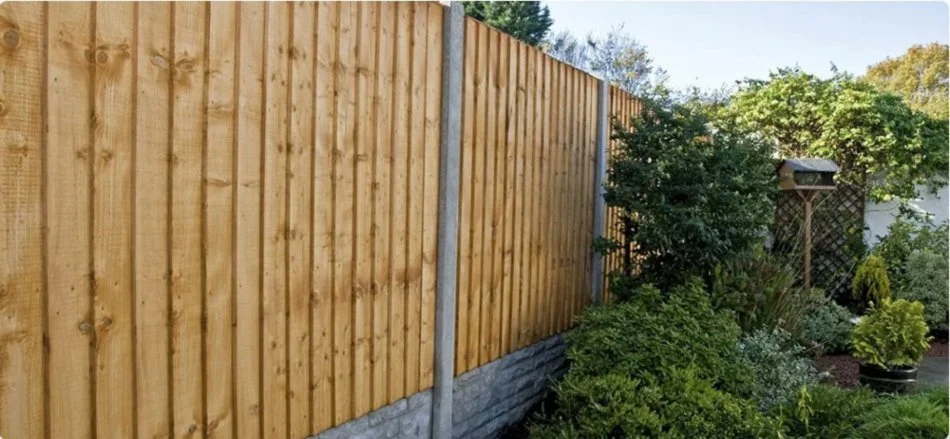
A solid closeboard fence with gravel boards at the base provides reliable containment. Timber can be chewed over time by determined dogs, making metal systems preferable for persistent chewers. Read more about our wooden fencing installation process at Ward Fencing.
Metal Railings
Bow-top or vertical bar metal railings could be suitable for cats and some smaller dogs provided bar spacing is appropriate, but they do not prevent climbing. Read more about our metal railing installation process.

FAQs Pet-Safe Fencing
-
Most domestic dogs are safely contained by a 1.8 metre fence, but large breeds, working dogs and known jumpers may require the full 2 metres. The fence needs to be solid with no horizontal rails that could act as a foothold.
-
Fit a gravel board at the base of the fence (most installations include these), and consider burying an L-shaped section of wire mesh just below the surface extending inward from the post line for persistent diggers. Learn more about professional fence installation.
-
Yes. The smooth steel panels have no horizontal rails to climb, close infill with no gaps and the gravel board at the base removes the usual gaps at ground level. It is one of the more dog-resistant fence systems available.
-
Horizontal rails give dogs and cats footholds for climbing and can be a safety risk if an animal becomes trapped between rails. Smooth, vertical-infill or solid panel designs are safer for gardens with pets.
-
Standard garden fencing rarely reliably contains cats, as most breeds can climb or jump a 2-metre fence. Specialist roller-top or overhang systems are available for cat containment and can be added to most fence types as a separate accessory.
